AI for Interior Designers: Where It Helps and Where the Human Touch Still Matters
AI is officially everywhere.
And if you run an interior design business in 2026, you've probably wondered how much of it you should actually be using. Can it write your captions? Help with blog posts? Create presentations? Research products? Plan content? And if everyone is using the same tools, how do you make sure your business still sounds like...you?
I use AI in my own work, and I think it can be incredibly helpful. But I also think we need to stop treating it like the answer to every time-consuming task in our businesses. Sometimes AI saves time. Sometimes it just gives you something else to edit.
Use AI to Get Past the Blank Page
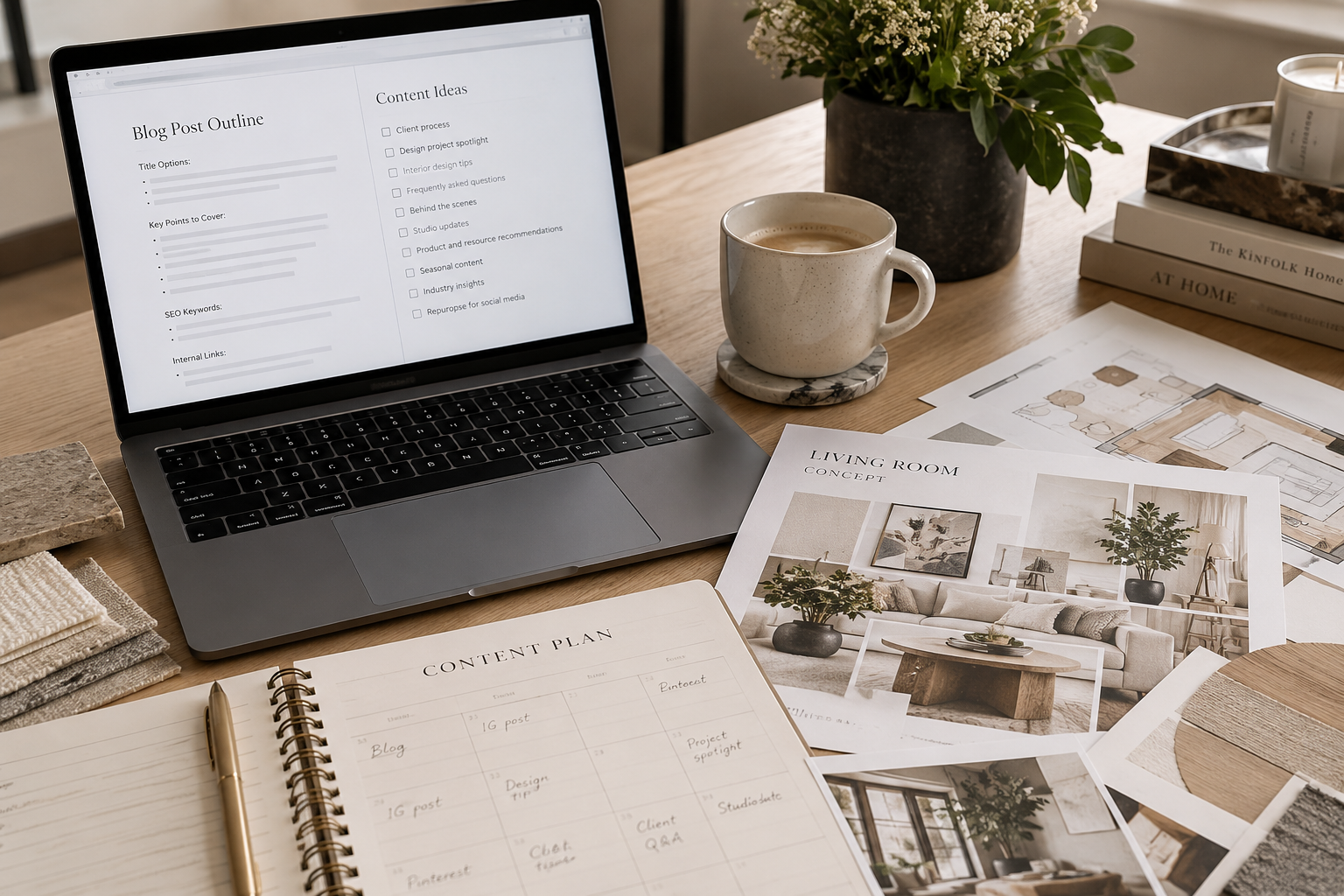
One of the best uses of AI is simply getting started. It can help brainstorm blog topics, organize rough notes, create an outline, repurpose existing content or take a scattered collection of ideas and give them some structure.
For an interior designer who has a running list of marketing ideas but approximately zero extra hours to do anything with them, that's useful. The key is treating AI as a starting point, not necessarily the finished product.
Your Brand Voice Still Needs a Human
You've probably seen the captions.
This space isn't just beautiful, it's a feeling.
Or my personal favorite, a paragraph filled with enough dramatic punctuation to make a living room reveal sound like the season finale of a reality show. AI can produce content quickly, but speed isn't the same thing as good marketing.
Your clients are hiring you. They want to understand your personality, your perspective and how you approach design. The strongest content still needs your real projects, opinions, expertise and experiences behind it. That's the part AI can't manufacture.

Use AI for Efficiency, Not Expertise
AI can also be helpful behind the scenes. Think organizing information, brainstorming content, summarizing notes or speeding up repetitive work.
But when you're dealing with actual project specifications, pricing, client communication or anything that needs to be factually correct, human review matters.
Current conversations around AI in the design industry are increasingly focused on where it fits into an established workflow rather than whether designers should use it at all.
That's the approach I like. Let technology make the repetitive parts easier, but don't outsource the thinking, relationships and expertise that make your business valuable.
AI Doesn't Fix a Missing System
This might be the biggest one.
If your project information is scattered across five platforms, your marketing doesn't have a plan and every new client gets a slightly different process, adding another AI tool isn't necessarily going to solve the problem. It might just become tool number six.
Interior design businesses are already dealing with increasingly complicated software stacks, and adding more technology without a clear workflow can actually create more work.
Sometimes the solution isn't another app. Sometimes it's a better process, a reusable template, an organized system or another person taking something off your plate.
Use the Tools. Keep the Personality.
I'm definitely not anti-AI. I use it, and I think interior designers should take advantage of tools that genuinely make running their businesses easier. But your efficiency shouldn't come at the expense of your personality.
Use AI to brainstorm. Use it to organize. Use it to get yourself unstuck and speed up the repetitive parts. Then bring your own expertise back into the room.
Because the goal isn't to make your business sound like it was run by AI. It's to give yourself more time to run it.