Interior Design Business Templates: How to Create a More Organized Client Experience
There’s a lot happening behind the scenes of an interior design business that never makes it to Instagram.
Client onboarding. Proposals. Presentations. Sourcing. FF&E schedules. Product tracking. Procurement. Install information. And, of course, the inevitable search for the document you know you created for the last project but cannot seem to find anywhere.
The creative side of interior design may be why you started your business, but the systems behind it are what help you run that business well. That’s where interior design business templates can make a surprisingly big difference.
I created my templates specifically for interior designers because, through my work as a Virtual Interior Design Assistant, I see how much time goes into the documents, presentations and organization behind every project. The goal isn't to give you another pretty Canva file to download and forget about. It's to give you a professional starting point for something your business already needs.
Templates Should Be Part of Your Interior Design Process, Not Just Pretty Documents
I think we’ve moved past the idea that a business template is simply a shortcut for making something look professional. A good template should actually make your process easier.
Instead of recreating a client welcome guide every time you onboard someone or starting every design presentation with a blank Canva page, you have a repeatable framework ready to go.
That consistency matters. A clearly defined, repeatable client process can reduce administrative work while helping clients understand what happens throughout their project.
For an interior designer, templates can become part of that process from the first inquiry all the way through the final project handoff.
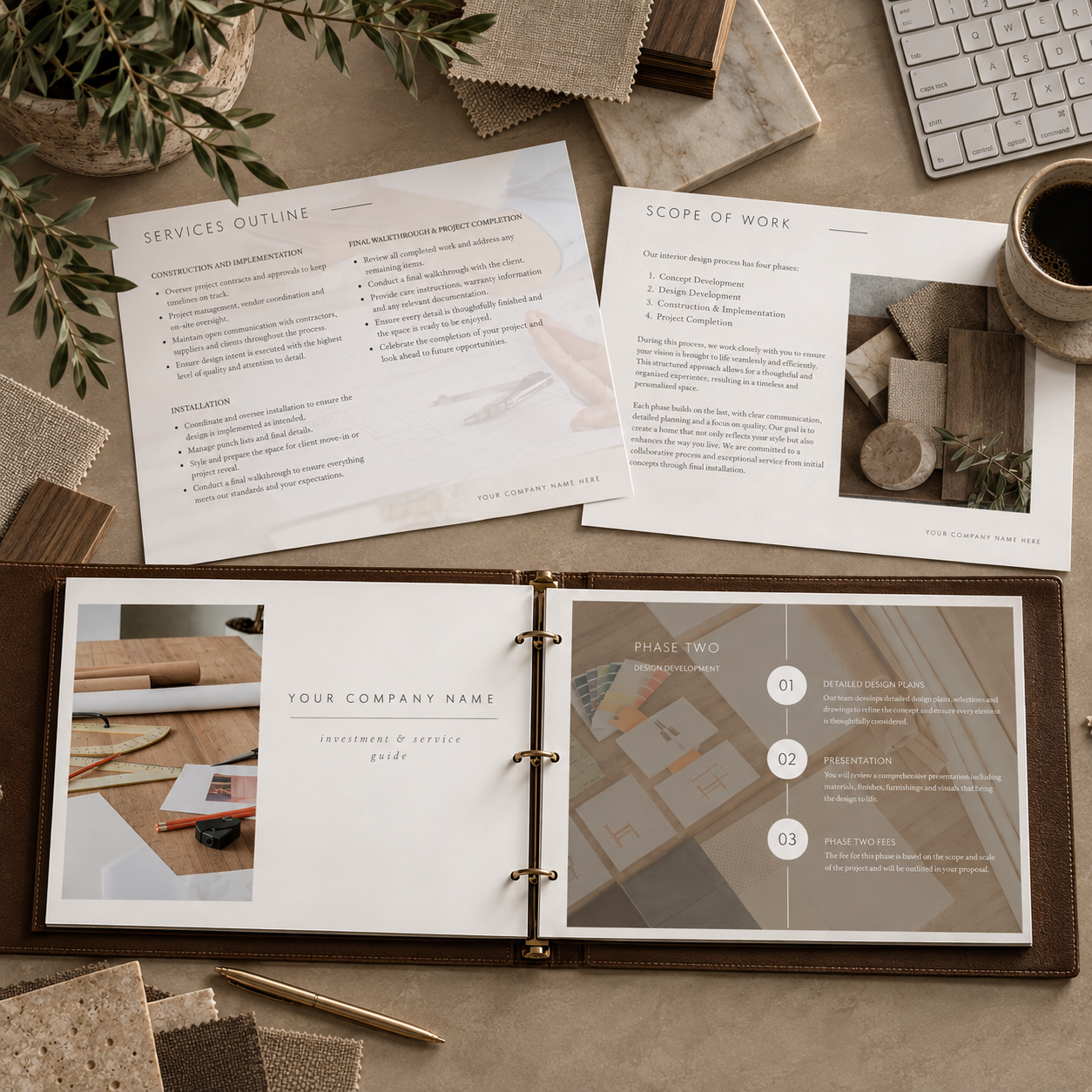
Before the Project: Make a Strong First Impression
Long before you're selecting finishes or presenting furniture, your potential client is forming an opinion about what it will be like to work with you.
This is where an Interior Design Service & Investment Guide and Design Proposal Template can do some heavy lifting.
Rather than explaining your services from scratch every time someone inquires, your materials can introduce your studio, explain how you work and answer common questions before the project even begins.
It makes the experience easier for your potential client, but it also makes things easier for you.
Fewer repetitive emails. Fewer documents created on the fly. More consistency from one inquiry to the next.
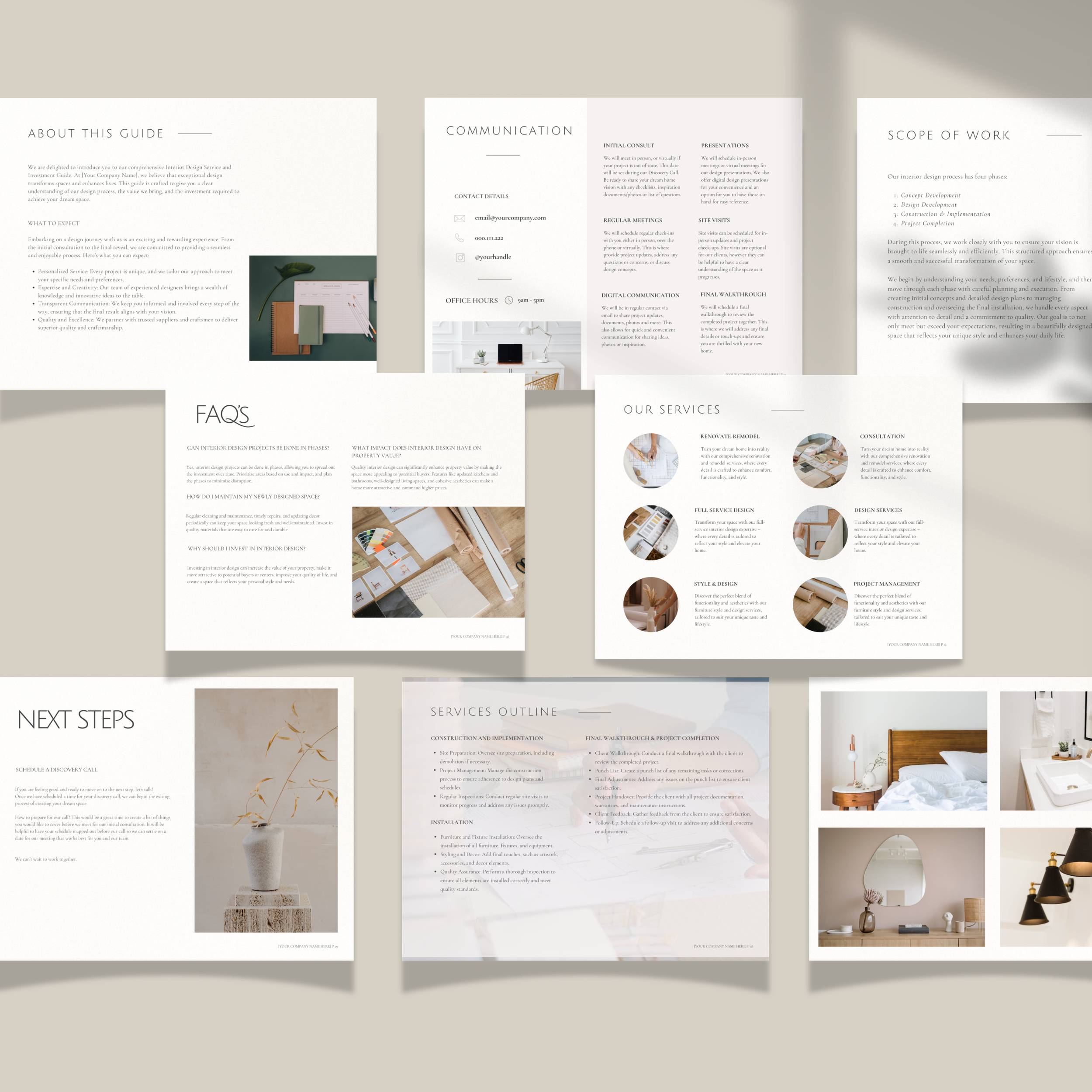
Client Onboarding: Set Expectations Before the Project Gets Busy
Once someone becomes a client, communication becomes even more important.
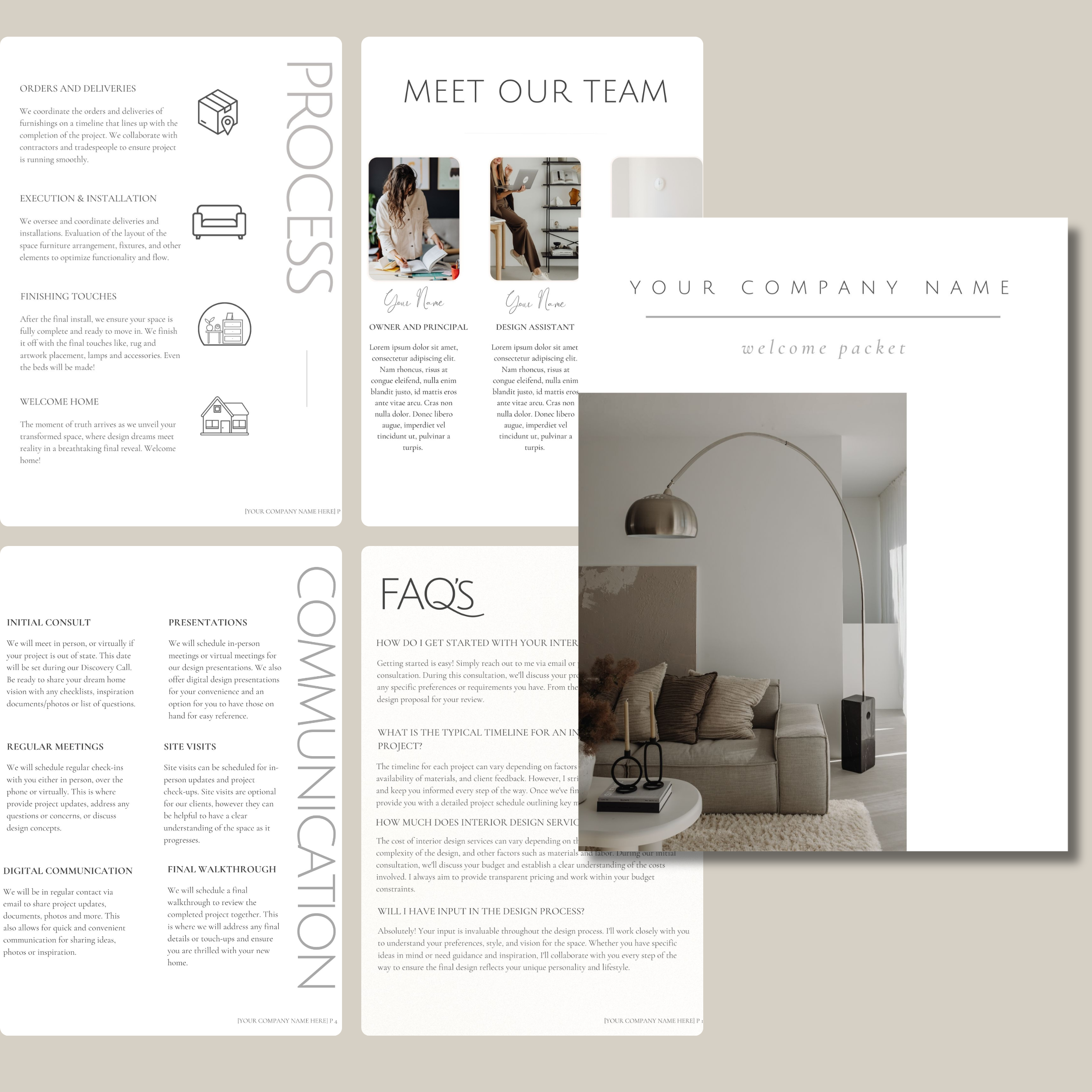
An Interior Design Client Welcome Packet gives you one place to explain your process, communication policies, project phases, purchasing procedures, timelines and other important information your client needs to know. This isn't about overwhelming someone with rules on day one. It's about removing uncertainty.
Clear documentation helps align clients and designers around project details, expectations and deliverables, which is one reason structured project documents continue to be such an important part of modern creative workflows.
Your client knows what happens next, and you aren't answering the same questions throughout every project. Everybody wins.
Design Development: Spend Your Time Designing, Not Formatting
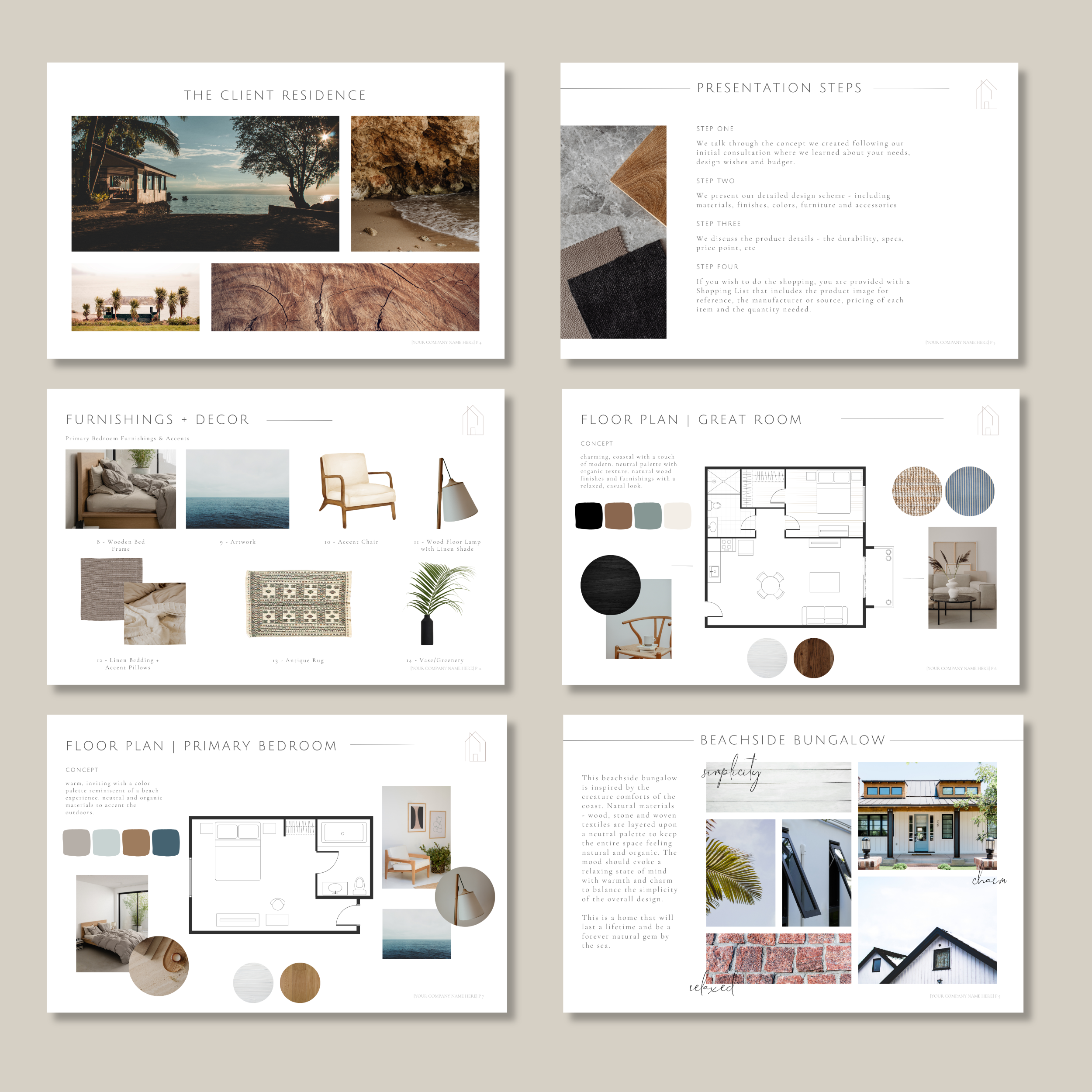
Then we get to one of my personal favorites: presentations. You probably don't need to reinvent your presentation layout for every client. Your design should change. Your presentation system doesn't necessarily need to.
An Interior Design Presentation Template gives you established layouts for concepts, furniture, finishes, materials, floor plans and other selections. You can drop in the project-specific information and customize the presentation without spending half your afternoon nudging text boxes three pixels to the left. The same goes for interior design mood board templates.
The template isn't doing the creative work for you. It's taking care of the framework so you can concentrate on the creative work that actually requires your expertise.
Sourcing and Procurement: Give All Those Details Somewhere to Live
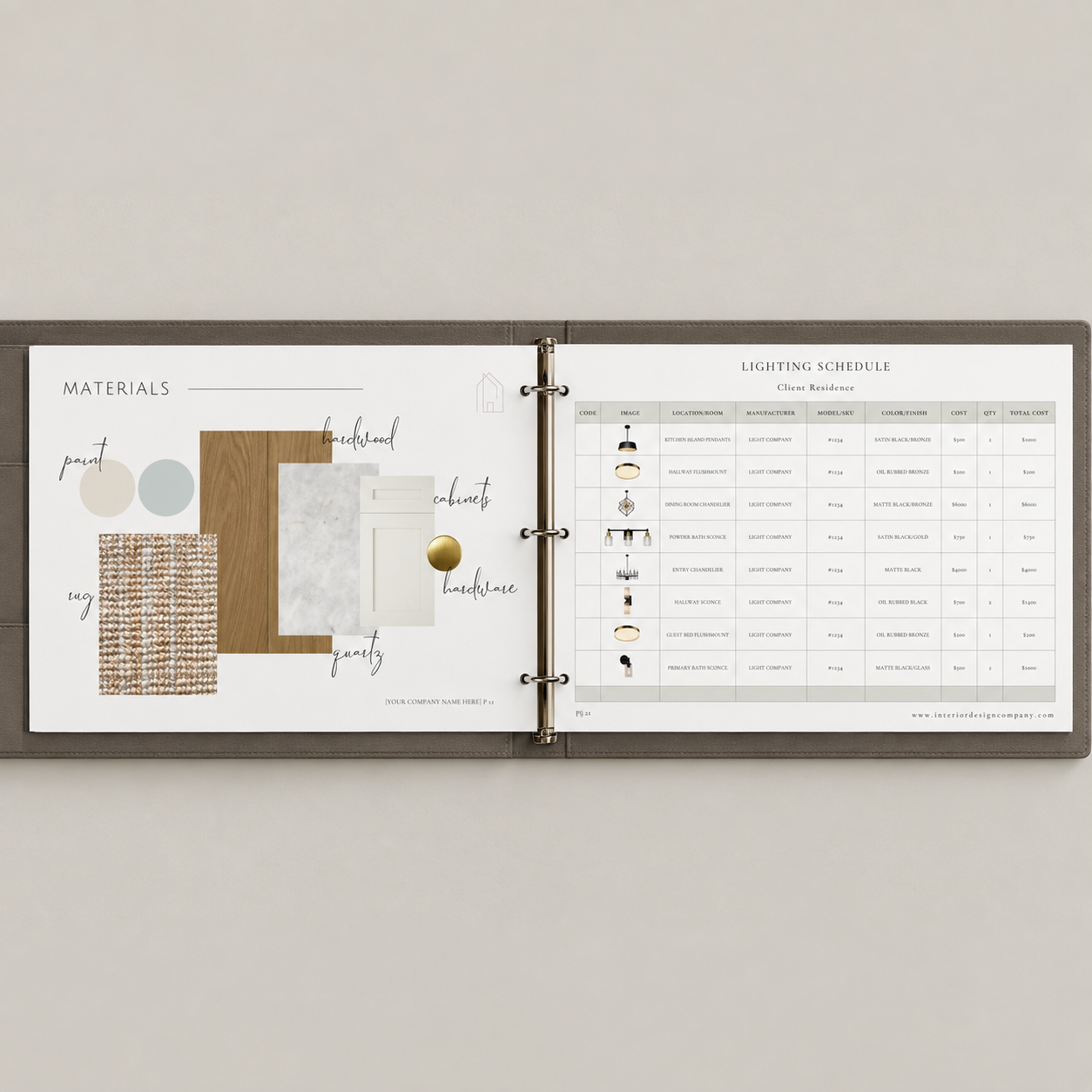
Ah, procurement. The glamorous side of interior design. Once you're dealing with dozens or hundreds of selections, you need somewhere to organize product names, manufacturers, SKUs, finishes, quantities, pricing and links.
That's why an FF&E Schedule Template for interior designers can be such an important part of your workflow.
My FF&E Schedule is available for Canva, Excel and Google Sheets because there's no single perfect system for every interior design studio. The important thing is having a repeatable structure that works for your business.
Instead of rebuilding your schedule with every new project, you start with a system that's already there and adapt it as needed.
Project Completion: Don't Forget About the Client Handoff
The client experience doesn't end the second the install is finished.
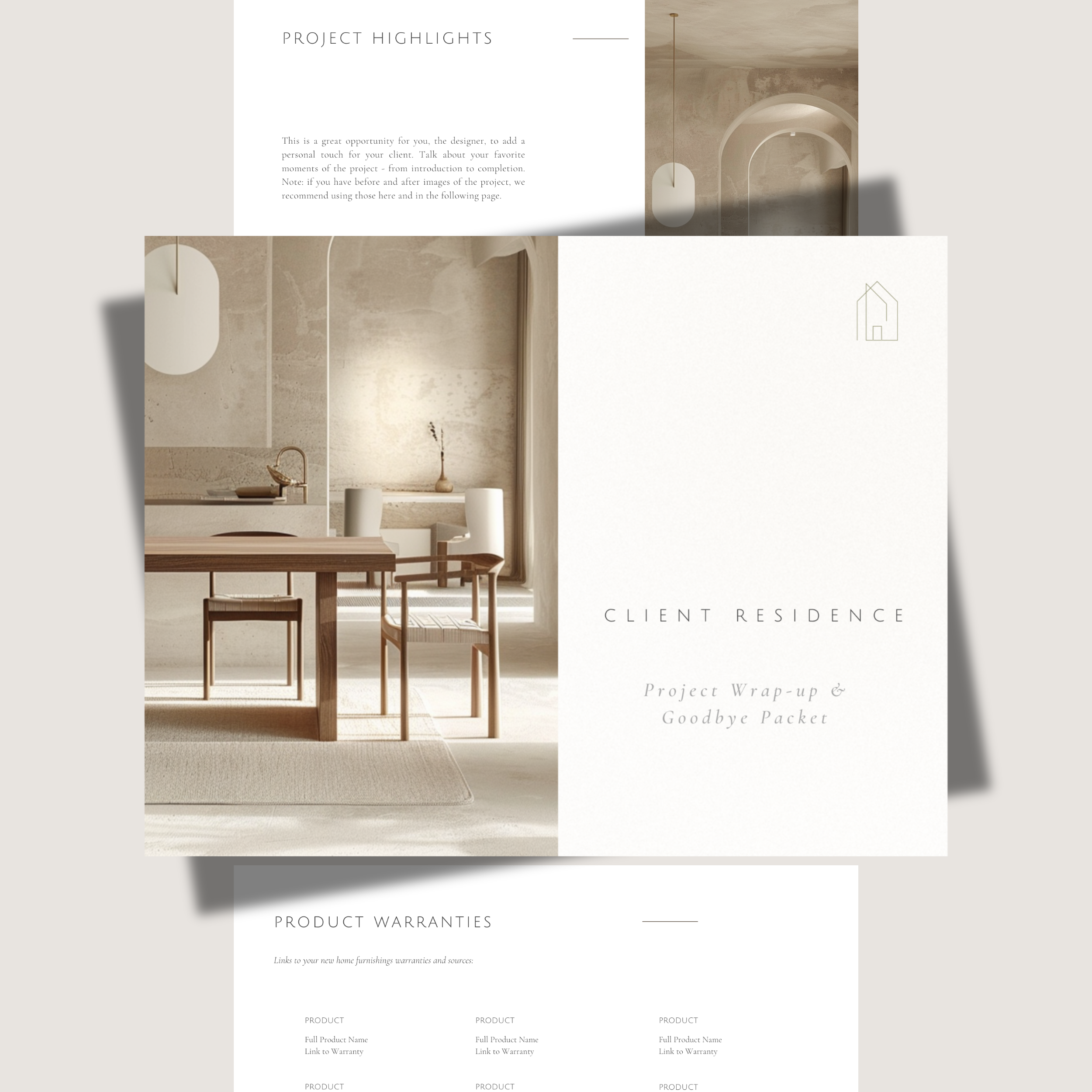
A thoughtful Client Goodbye or Project Handover Packet gives you a polished way to close out the project, provide important information and guide clients through what comes next.
It's a relatively small touchpoint, but it helps the entire experience feel complete. When your investment guide, welcome materials, design presentations, project documents and final handoff all feel connected, your business feels connected too.
And that brings us to one of the biggest benefits of using templates throughout your interior design process: consistency.
Why I Create Templates Specifically for Interior Designers
My templates aren’t generic business templates with “interior designer” added to the title. I work behind the scenes with interior designers, so I understand the presentations, sourcing, client communication, schedules and countless details that go into running a design studio.
Each template is designed around real interior design business needs, with customizable layouts and prewritten content to give you a useful starting point. Add your branding, adjust the wording and make it fit the way you work.
The goal is simple: spend less time creating business documents from scratch and more time actually using them.
Spend Less Time on the Behind-the-Scenes Work
Your business needs systems, your clients need clear communication, and your projects need organization. But you don’t have to build every piece of that process yourself.
Professional interior design business templates give you a framework you can customize, reuse and refine as your studio grows.
Because your time is probably better spent designing someone’s home than adjusting the spacing on page 17 of a welcome packet at 10:30 at night.
Explore the Lauren Spencer Designs Interior Design Templates & Resources for customizable welcome packets, presentations, FF&E schedules, proposals, investment guides and more.
(Between you and me - we have something big in the works. If you want them all, and even more every month, we have a Template Vault opening soon! 🤫)
Until next time,