What Should Interior Designers Actually Be Outsourcing?
There comes a point in running an interior design business when the problem isn't that you don't know what needs to be done. You know exactly what needs to be done.
That's the problem.
There are client projects, sourcing, presentations, emails, social media, blog posts, website updates, procurement, scheduling and the random Tuesday afternoon task that somehow consumes three hours. Eventually, doing everything yourself stops being impressive and starts getting in the way.
So, what should an interior designer actually outsource?

Start With the Things Only You Don't Need to Do
This is one of the easiest ways to look at your workload. There are things in your business that genuinely need you. Client relationships, creative direction, important design decisions and the overall vision for your projects and studio.
Then there are things you've continued doing because you've always done them. Those are usually the first places I'd look.
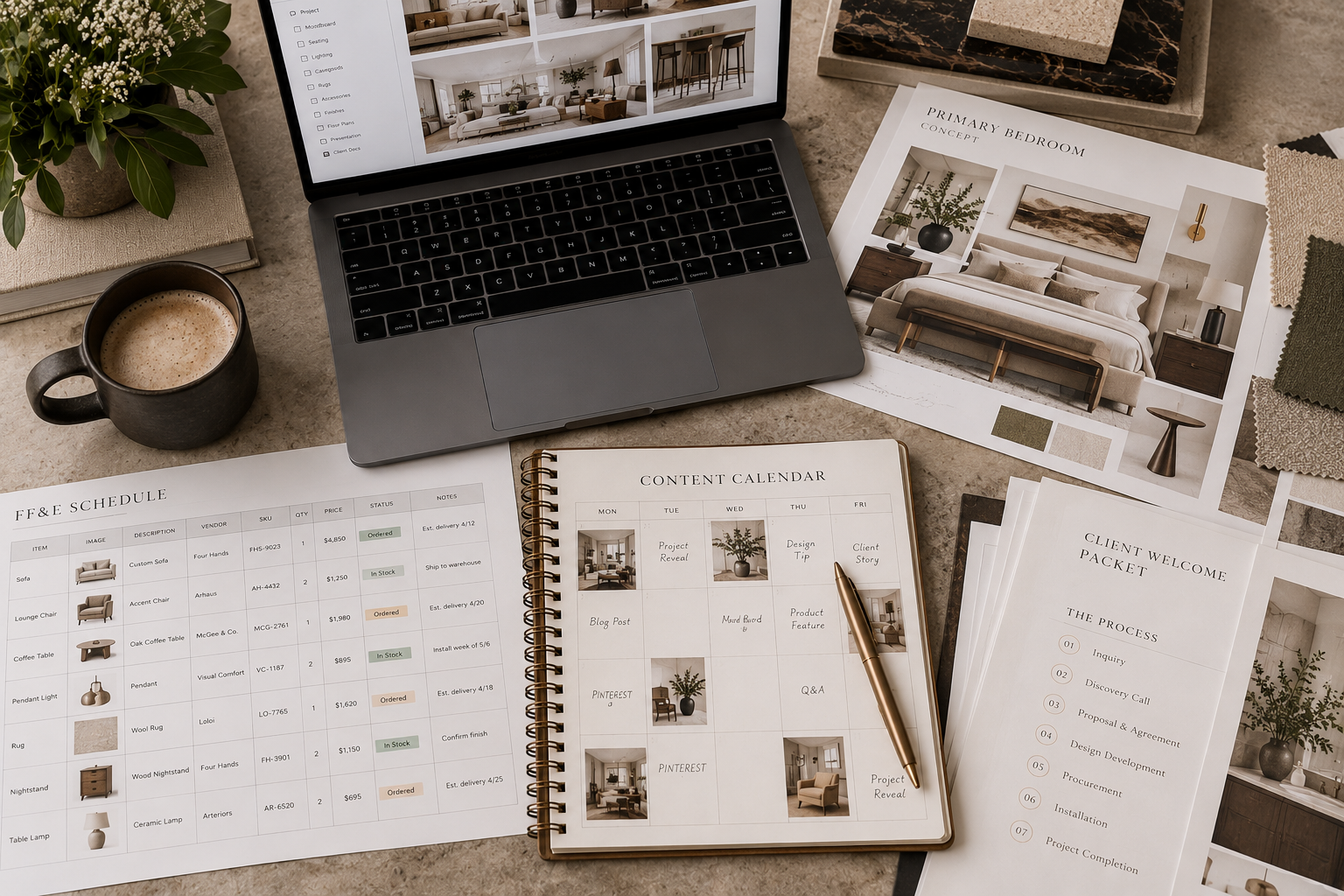
Product research, sourcing support, presentation formatting, schedules, client documents, blog writing, social media planning, Pinterest and website updates can all take significant time without necessarily requiring the principal designer to personally complete every step.
Look for the Tasks You're Always Putting Off
You know the ones.
The blog post you'll write when things calm down.
The portfolio that still needs updating.
The Pinterest account you haven't touched since March.
The client document you keep meaning to redesign.
When the same task keeps moving to next week's list, it's probably telling you something.
Marketing is a great example. It matters, but client work will almost always win when the two compete for your time. That's why designers can go weeks without posting, months without publishing a blog or years without updating parts of their website.
If something is important to growing your business but rarely makes it to the top of your list, that's a pretty good candidate for outsourcing.
Don't Wait Until You're Completely Overwhelmed
This is where I think a lot of small business owners get stuck. We tend to think we need to be completely booked, wildly profitable and approximately three emails away from losing our minds before we're allowed to ask for help.
You don't.
Getting support before you're completely overloaded gives you time to actually create systems, communicate how you work and build a relationship with the person helping you. And support doesn't automatically mean hiring a full-time employee.
It might mean working with a virtual design assistant for a set number of hours each month. It could mean outsourcing social media. It could mean purchasing professional templates instead of creating every client document yourself.
The goal is to find the level of support that makes sense for the business you have right now.
Outsource the Work, Not Your Point of View
This is especially important with creative businesses. Getting help doesn't mean handing over your business and hoping for the best.
Your assistant should understand how you work. Your social media should still sound like you. Your templates should be customized to your brand. Your marketing should reflect your actual expertise and projects.
Good support should make your business feel more like you because you're no longer rushing through everything just to get it done.
Ask Yourself One Question
If you're not sure what to outsource first, look at your typical week and ask:
What am I spending time on that someone else could do well with the right direction?
That's usually where you'll find your answer.
For one designer, it might be sourcing and presentations. For another, it's social media and content. For someone else, it's simply having professional systems and templates in place so they aren't recreating the same documents for every project.
There isn't one correct way to build an interior design business. But you probably don't need to personally do every single thing inside yours.